Membrane and details
Identify TPO, EPDM, modified bitumen or another existing system. Seams and penetrations need compatible repairs.
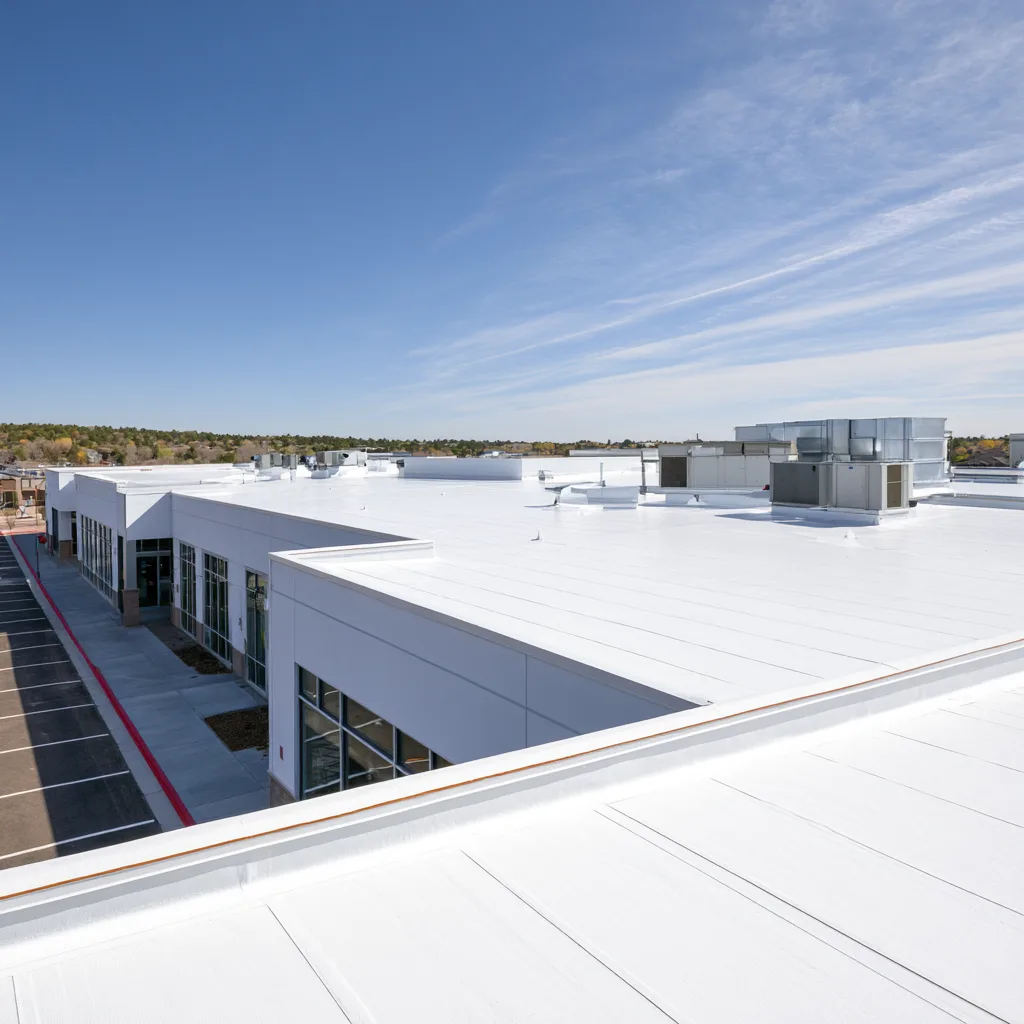
A low-slope roof needs a covering designed for its pitch and a clear route for water to leave the building.
A nearly flat roof relies on drains, scuppers or edges to release water across a small slope. Debris, low areas, compressed insulation or changes around rooftop equipment can interrupt that path. We examine the drainage as well as the covering, because repairing a surface opening does not correct the reason water remains around it.
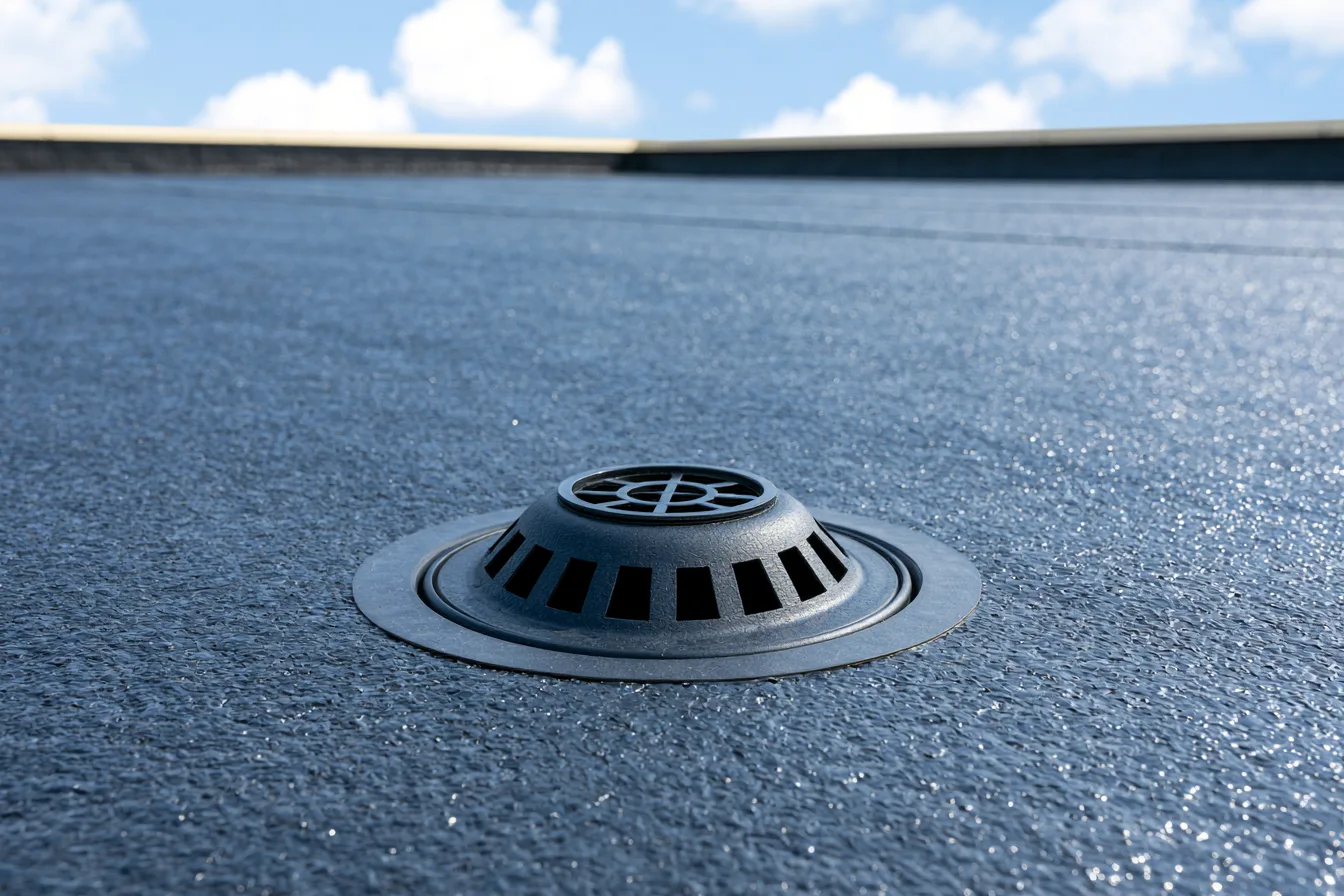
The useful scope includes the water path and the layers beneath the surface.
Identify TPO, EPDM, modified bitumen or another existing system. Seams and penetrations need compatible repairs.
Assess outlets and roof geometry. Tapered insulation or other designed changes can be part of replacement when drainage needs correction.
Wet insulation and deteriorated support change the repair boundary and can rule out a coating-only approach.
Choose a system that fits the building and its details.
A thermoplastic membrane with heat-welded seams.
TPORubber membrane with compatible seam and flashing products.
EPDMReinforced asphalt sheets with product-specific application.
Modified bitumenMeasured area, existing layers and drainage work determine the project.
Moisture investigation, insulation removal and deck repair can be substantial even when the surface defect is small.
Perimeter details, curbs and rooftop service routes affect material and labor.
Only within the shingle product’s slope requirements and required assembly details. Below 2:12, use a different type of covering rather than treating shingles as a universal match.
No. The cause, duration, membrane condition and underlying assembly need assessment. Clearing an outlet is different from correcting roof geometry or wet insulation.
Share the building location and the drainage or leak issue you have noticed.